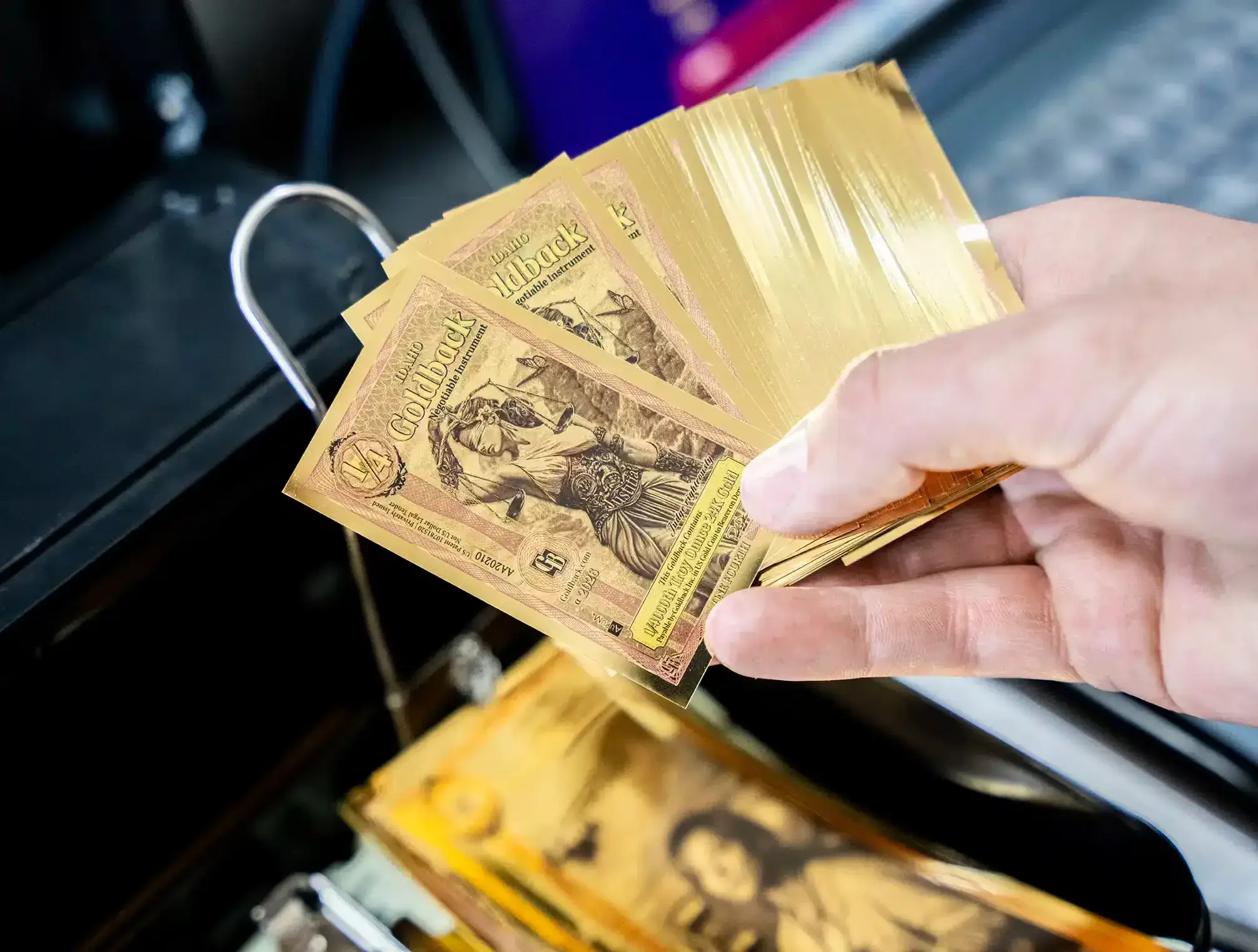
If you are trying to understand how Goldback pricing works, the most important thing to know is that every denomination starts with the daily official value of one Goldback. Once that base number is published, the pricing for the rest of the lineup becomes straightforward multiplication.
That is why the official Goldback price matters so much for buyers, collectors, and people comparing Idaho Goldback denominations. Whether you are looking at a 1 Goldback, a 5 Goldback, or a 100 Goldback, the day’s value begins with the same published one-note rate.
What is the official Goldback price?
The official Goldback price is the published daily value of one Goldback. It acts as the reference point used across the series and gives buyers a simple way to understand how Goldback value is being quoted on a given day.
When people ask for the Goldback value today, they are usually asking for this one-note official figure. Once you know that number, the rest of the denomination pricing becomes easy to understand.
How Goldback pricing works across denominations
Goldback denomination pricing is based on multiplication from the one-note official rate. If one Goldback has a published daily value, the price of larger denominations is simply that value multiplied by the denomination amount.
That means Idaho Goldback pricing is easier to follow than many people expect. You do not need a separate pricing formula for every note in the lineup. You only need the current official 1 Goldback value and the denomination amount you are evaluating.
- 1 Goldback = official one-note daily value.
- 5 Goldbacks = 5 times the one-note value.
- 10 Goldbacks = 10 times the one-note value.
- 25, 50, and 100 Goldbacks scale the same way from the base rate.
Why Goldback value changes daily
Goldback value changes because the published daily rate reflects current market conditions rather than staying frozen at one static number. Buyers who follow Goldback pricing over time will notice that the official rate moves, just like other gold-related pricing references can move.
That daily movement is why it is helpful to check the current Goldback price before making a purchase, comparing denominations, or deciding whether now is the right time to add to an Idaho Goldback collection.
Official Goldback price vs market Goldback price
You may sometimes see both an official Goldback price and a market Goldback price. The official figure is the standard published reference point. A market figure can help provide context about broader conditions or how pricing is being discussed outside the official daily rate.
For most buyers browsing this catalog, the official Goldback price is the most practical number to use first because it creates a consistent basis for comparing all Idaho denominations.
- Use the official Goldback price as the primary buying reference.
- Treat market figures as context, not a replacement for the daily official rate.
- Compare denominations using the same day’s pricing source for consistency.
How Idaho Goldback pricing is shown in this catalog
This Idaho Goldbacks site calculates note pricing from the official one-note Goldback value and then scales that number across the full Idaho series. That makes every displayed product price consistent with the same pricing basis.
Instead of manually maintaining a separate price for each note, the catalog can respond to changes in the daily Goldback value while keeping the denomination math transparent to the visitor.
Why live pricing matters when comparing notes
Live pricing matters because the attractiveness of a denomination can look different depending on the day’s official value. Buyers comparing a 1 Goldback to a 10 Goldback or deciding whether to move into a 25 Goldback are making a better decision when they use current numbers instead of stale pricing.
This is especially useful for people who want to balance collectibility, affordability, and gold exposure when building an Idaho Goldback collection.
How to use Goldback pricing when choosing what to buy
The simplest way to use Goldback pricing is to start with your budget, check the current official Goldback price, and then map that budget against the denominations that fit your goals. Some buyers want entry-level flexibility, while others want a stronger showcase note or a larger amount of gold value in fewer pieces.
Once you know the current one-note rate, it becomes much easier to compare a small starter purchase, a mixed collector set, or a larger denomination buy without guessing how the pricing connects.
- Check the current 1 Goldback value first.
- Multiply upward to compare the denominations you are considering.
- Decide whether your goal is collecting, gifting, stacking, or practical flexibility.
- Use live pricing instead of relying on memory or older screenshots.
What buyers should remember about Goldback pricing
Goldback pricing is easier to understand once you stop thinking of every note as a separate pricing mystery and start with the one-note official value. That daily base price explains how the rest of the lineup is derived.
For anyone buying Idaho Goldbacks, that means the best first step is always the same: check the official Goldback price, compare the denominations from that number, and then choose the note or set that best matches your goals.
If you understand the daily official 1 Goldback price, you understand the core of how Goldback pricing works. Every Idaho denomination builds from that same base value.