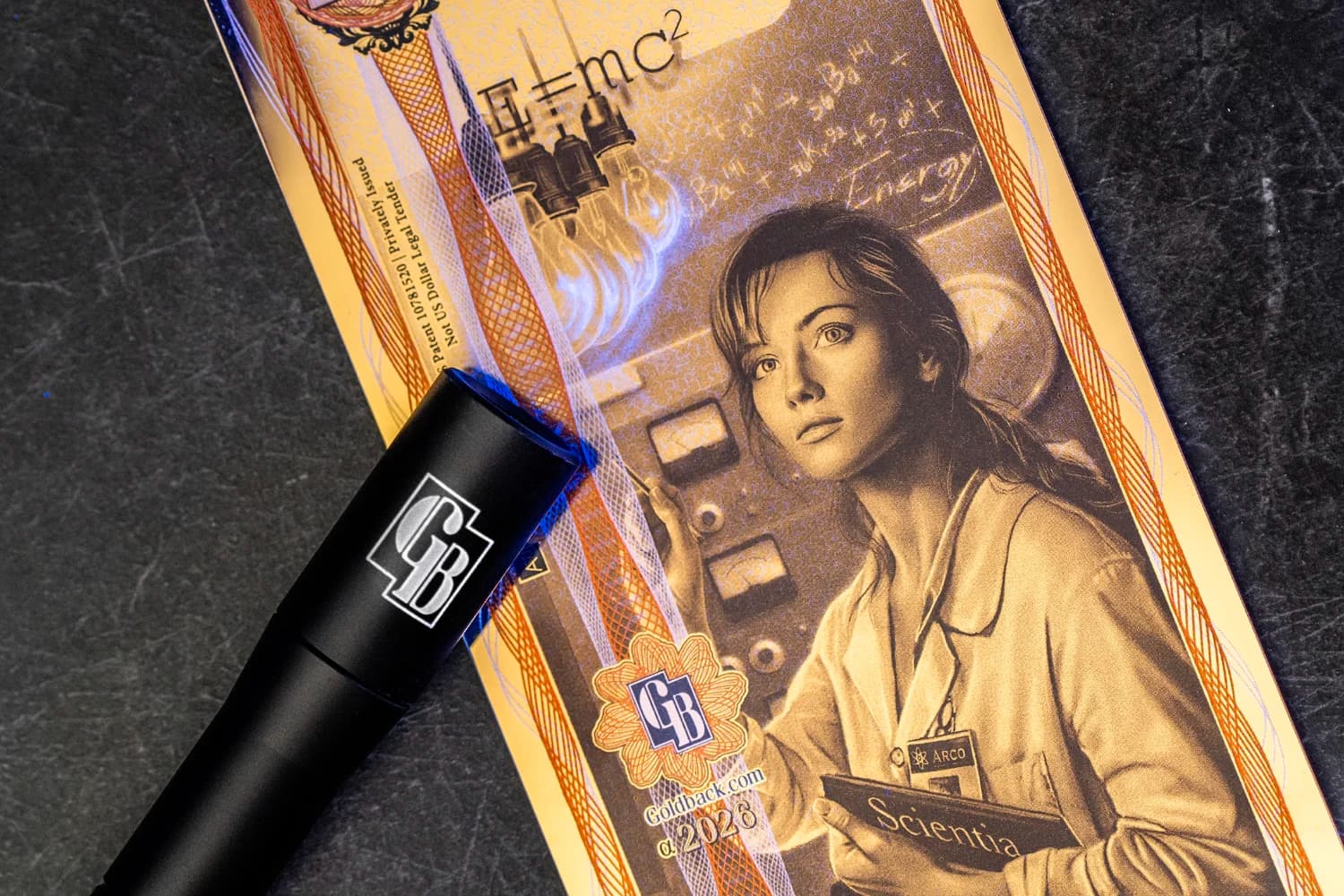
If you want to know how to tell whether a Goldback is real, the best place to start is by understanding the built-in Goldback security features that make the notes visually distinct. Genuine Goldbacks are not meant to feel like generic novelty notes. They are intentionally produced with layered construction, fine detail, and recognizable verification cues that reward close inspection.
For Idaho Goldback buyers, that matters for two reasons. First, knowing how Goldback authenticity works gives you more confidence when buying, holding, and showing notes to other people. Second, understanding the visible security features helps you explain why genuine Goldbacks are different from ordinary printed collectibles or imitation products.
What makes Goldbacks different from ordinary printed notes
Goldbacks stand apart because they are not simply paper designs meant to imitate value. They are physical, precision-manufactured notes containing a measured amount of gold and produced with a visual and structural finish that looks substantially different from ordinary printed collectibles.
That difference is one of the first things people notice when handling a genuine Goldback. The appearance, feel, and detail level all work together to create a note that is harder to confuse with a basic reproduction once you know what to look for.
Core Goldback security features to inspect first
When checking Goldback authenticity, start with the obvious visual elements before jumping into specialized tools. Most buyers can identify a great deal by slowing down and looking at the note carefully under good lighting.
A real Idaho Goldback should present crisp line work, intentional layering, and a finish that feels coherent across the full note rather than flat, muddy, or loosely reproduced.
- Look for sharp artwork and fine engraved-style detail.
- Check that the gold layering and note finish appear deliberate and even.
- Inspect the borders, denomination markings, and typography for clarity.
- Compare the overall note quality against known genuine examples whenever possible.
Why fine detail matters when verifying a Goldback
One of the strongest anti-counterfeiting signals on a Goldback is the level of detail visible throughout the design. Genuine notes are packed with intricate artwork, denomination cues, and precise visual structure that become more convincing the longer you inspect them.
Counterfeit or low-quality imitation notes tend to lose integrity in small details first. That can show up as softened line work, uneven edges, blurry ornamentation, or typography that does not feel as clean and intentional as it should.
How UV and advanced security cues help
Some Goldback security features go beyond the most obvious printed appearance. Advanced cues such as UV-reactive elements are valuable because they give buyers and merchants another way to verify that a note aligns with genuine production standards.
These features are especially helpful when you want a faster confidence check without relying only on memory. They do not replace overall inspection, but they add another layer of verification that supports Goldback authenticity.
- Use UV-based verification as a supporting check, not the only check.
- Combine UV inspection with normal visual review of detail and finish.
- If a note behaves differently from a known genuine example, slow down and inspect further.
Serial numbers, consistency, and side-by-side comparison
Side-by-side comparison is one of the easiest ways to build confidence when you are still learning how to verify Goldbacks. If you already own a genuine Idaho Goldback from a trusted source, comparing a new note against it can reveal differences in finish, design sharpness, and overall consistency very quickly.
Serial awareness also matters because it teaches you to inspect the note as a manufactured instrument rather than as a generic souvenir item. The more familiar you are with how genuine Goldbacks present themselves, the easier it becomes to spot irregularities.
- Compare note size, finish, and sharpness against a known real note.
- Check that numbering and design elements look intentional and professionally integrated.
- Treat unusual inconsistencies as a reason to inspect more closely, not as something to ignore.
How to inspect an Idaho Goldback before buying
The best time to think about Goldback authenticity is before the transaction is complete. Buyers should examine the note under good light, review the surface and detail, and make sure the overall quality matches what a genuine Idaho Goldback should look like.
If you are buying online, the same principle still applies. Use clear images, work with sellers who present the note well, and prefer sources that already understand how Goldback verification matters to serious collectors and buyers.
- Inspect in bright, even lighting whenever possible.
- Prefer sellers who show clear photos and accurate denomination details.
- Ask questions if the note presentation feels vague or incomplete.
- When in doubt, compare against official imagery or a known genuine note.
Why trusted sourcing is part of Goldback security
Even the best Goldback security features work better when the note comes from a source you already trust. Buying from reputable sellers reduces uncertainty and makes the verification process easier because the note begins with stronger provenance.
That does not mean you should skip inspection. It means trusted sourcing and careful verification should work together. Buyers who do both tend to have a much smoother experience than buyers who rely entirely on appearance or entirely on seller reputation alone.
What buyers should remember about Goldback authenticity
Learning how to tell if a Goldback is real is mostly about pattern recognition. The more often you inspect genuine notes, the easier it becomes to recognize the layered look, the clean detail, and the consistent finish that make Goldbacks feel distinct.
For Idaho Goldback buyers, the smartest approach is simple: understand the core Goldback security features, inspect notes carefully, use advanced verification tools when helpful, and buy with the kind of confidence that comes from familiarity rather than guesswork.
Goldback authenticity is strongest when you evaluate the full note, not just one detail. Look at the craftsmanship, compare against known genuine examples, and use built-in security cues to verify with confidence.