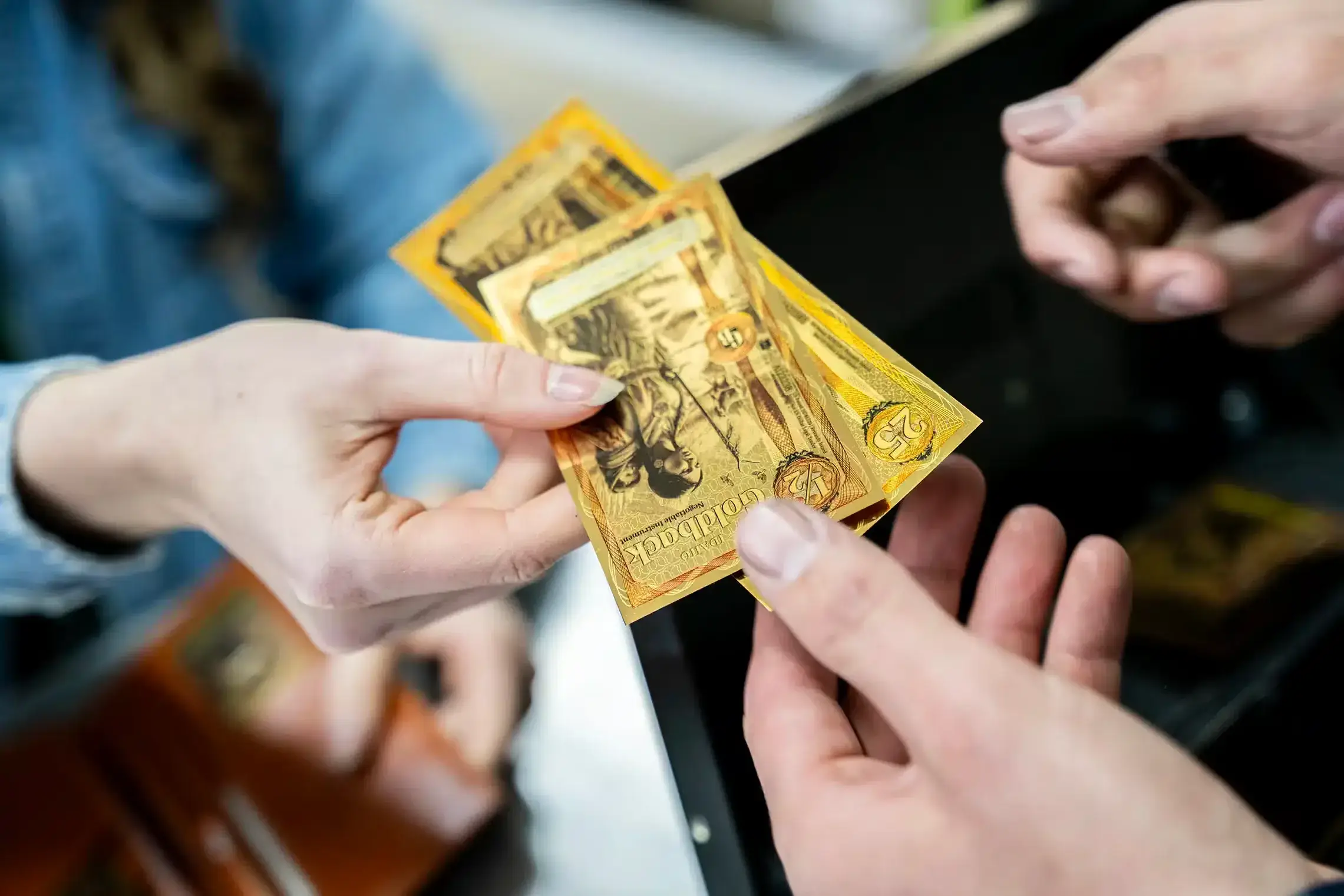
Goldbacks are designed to make small-denomination physical gold practical in a way traditional bullion rarely is. Instead of needing to weigh, cut, or negotiate around metal content on the spot, buyers and sellers can reference the published Goldback rate and use familiar note-style denominations.
That makes them useful for people who want a tangible store of value that is also easier to spend in voluntary exchange. In practice, the smoother the transaction feels, the more likely both sides are to be comfortable using Goldbacks again.
How a real Goldback transaction usually works
Most real transactions begin with a dollar price, not a Goldback price. A merchant may list goods in dollars, then convert the final total into Goldbacks using the day’s published rate or a mutually agreed value.
That means the process is usually simple: confirm the amount due, check the current Goldback value, calculate how many notes satisfy the purchase, and decide whether the payment will be made fully in Goldbacks or as a split payment with dollars.
- Confirm the purchase total first.
- Reference the current one-Goldback value.
- Convert the total into the number of notes needed.
- Decide whether any remaining balance will be settled in cash or card.
Why denominations matter so much
Goldbacks become more practical when the denomination matches the transaction size. Smaller notes help avoid awkward overpayment and make it easier to settle everyday purchases without complicated change discussions.
That is why many people like to keep a mix of 1/4, 1/2, 1, and 2 Goldbacks available for spending. Larger notes can still be useful, but they tend to fit better for higher-value exchanges, gifting, or long-term holding rather than quick routine purchases.
- Fractionals are useful for low-dollar purchases or exact-value flexibility.
- 1 and 2 Goldbacks often feel like the most natural daily-use denominations.
- Larger notes are usually better when the total is already meaningfully above the one-note value.
How merchants typically think about acceptance
Merchants who accept Goldbacks are usually less focused on legal-tender status and more focused on whether the transaction is voluntary, clear, and worth accepting. If the exchange rate is easy to understand and the note is recognizable, the conversation becomes much easier.
In many cases, the strongest signal is confidence and clarity. A customer who can explain the current value, show the denomination, and complete the math quickly makes the transaction feel less experimental and more routine.
- Keep the explanation short and practical.
- Use the current rate, not yesterday’s memory.
- Present clean notes and recognizable denominations.
- Avoid turning checkout into a long debate about monetary theory.
What to say when spending Goldbacks
The best approach is usually direct and respectful. Ask whether the seller accepts Goldbacks or is open to a voluntary Goldback payment, then be ready with the current value. Keeping the conversation simple helps the exchange feel familiar instead of complicated.
A good script might sound like this: 'I have Goldbacks if you’d like to take part of the payment in spendable gold at today’s published rate.' That is often enough to open the door without overwhelming the merchant.
When split payments make the most sense
Not every transaction needs to be completed entirely in Goldbacks. In fact, mixed payments are often the most practical option. Someone might cover part of a purchase in Goldbacks and settle the remainder with cash or card.
This works especially well when the total does not line up neatly with the denominations on hand. Split payments reduce friction and let Goldbacks function as part of the transaction rather than forcing them to carry the entire exchange.
- Useful when you are slightly over or under the exact note value.
- Helpful when the merchant is newly accepting Goldbacks.
- A smart option when you want to spend a few notes without emptying your smaller denominations.
How to prepare before you try spending them
The easiest Goldback transactions happen before the transaction starts. If you know the current rate, understand your denominations, and already have smaller notes separated out, you can move quickly and confidently when the moment comes.
It also helps to think in rough note-value ranges ahead of time. That way you are not doing all the mental math at the counter for the first time while someone is waiting behind you.
- Check the day’s rate before heading out.
- Carry a usable mix of fractionals and 1s.
- Keep spend-ready notes separate from collector-grade notes.
- Know in advance when you prefer to use Goldbacks versus hold them.
Where Goldbacks tend to work best
Goldbacks often work best in voluntary, relationship-driven transactions where both sides are open to alternative stores of value. That can include local businesses, collectors, service providers, events, and private party exchanges.
The more flexible and conversational the transaction environment is, the easier it tends to be to use Goldbacks successfully. Busy, high-volume settings can still work, but smoother acceptance usually comes when the seller has already seen them or is open to the concept.
Goldbacks are easiest to use when you treat them like a prepared payment option, not an on-the-fly experiment. Know the rate, carry workable denominations, and keep the explanation short.